You’re lying in bed, trying to rest like the doctor said. Then you feel it, a dull ache in your lower back. Your mind races: Did I move too much? Is the embryo okay? Should I call the clinic?
If you’re reading this at 11 PM, unable to sleep because of that nagging backache, take a breath. You’re not alone, and what you’re feeling is probably completely normal.
Let me walk you through what’s actually happening in your body right now.
Why Does Your Lower Back Pain After Embryo Transfer?
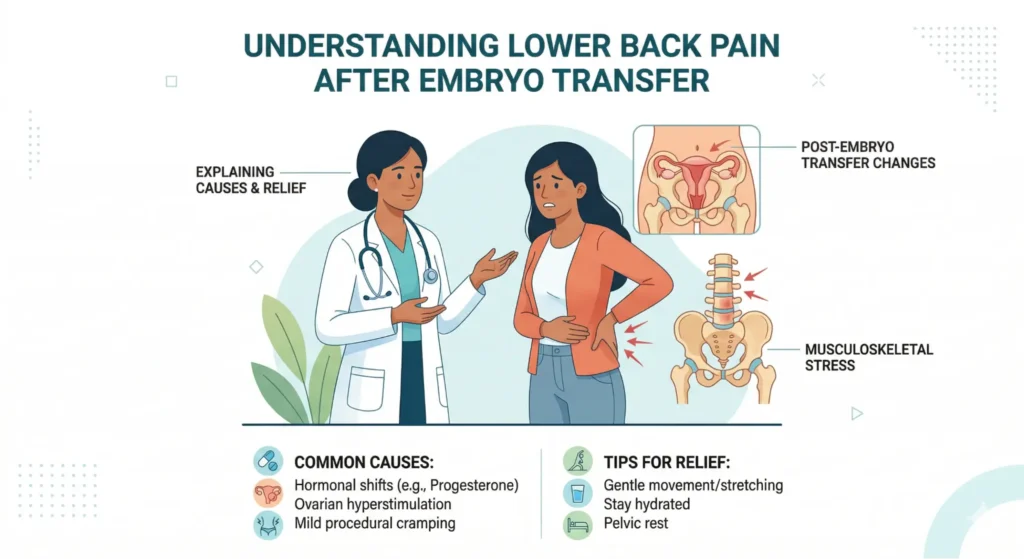
Here’s the truth: that ache in your back isn’t some mysterious signal from your body. It’s usually caused by two very normal things happening right now.
First, those progesterone medications you’re taking.
Remember those progesterone injections or inserts the clinic gave you? They’re doing exactly what they’re supposed to do, preparing your uterus for pregnancy. But progesterone has a side effect: it relaxes the ligaments and muscles in your pelvic area. When these tissues relax, you can feel a dull ache that spreads to your lower back.
Think of it like this: your body is adjusting to these hormones, and sometimes that adjustment feels uncomfortable.
Second, your ovaries are still recovering.
If you went through ovarian stimulation before your egg retrieval, your ovaries are likely still a bit swollen. They’re bigger than usual right now, and that can create pressure in your pelvis. This pressure doesn’t just stay in one spot; it can radiate to your lower back, making it feel achy or heavy.
Neither of these things means something went wrong. They’re just your body responding to the IVF process.
The Big Question: Does Back Pain Mean Implantation Is Happening?
I know what you’re wondering. You’ve probably read somewhere that back pain is a “sign” of implantation. Maybe someone in your WhatsApp group said they had back pain and got a positive pregnancy test.
Here’s what doctors actually know: symptoms during the two-week wait cannot tell you whether implantation has occurred.
I wish I could tell you that back pain means “yes, it worked!” or that no symptoms means “it didn’t work.” But the reality is that the progesterone medications create pregnancy-like feelings whether you’re pregnant or not. Your body feels the same hormones either way.
Many people who get pregnant feel nothing during the wait. Many people who don’t get pregnant feel lots of symptoms. The sensations you’re experiencing right now aren’t fortune tellers; they’re just side effects of medication.
Can You Move? Will It Dislodge the Embryo?
This is probably your biggest fear right now. Did going to the bathroom hurt your chances? What about walking to the kitchen? Should you be lying perfectly still?
Here’s the medical fact: the embryo cannot fall out.
Once the doctor places the embryo inside your uterine cavity, it stays there. Your uterus isn’t like a jar where things can tip out if you move around. The walls are gently touching each other, and the embryo is safely nestled inside.
Getting up to use the bathroom, sitting in a chair, walking around your home, none of these normal activities will dislodge the embryo.
In fact, research shows that women who return to normal activity right after transfer have the same (or sometimes better) success rates as women who stay in bed for days. Bed rest doesn’t help implantation. What it does do is give you more time to worry and focus on every tiny sensation in your body.
What's Normal and What's Not?
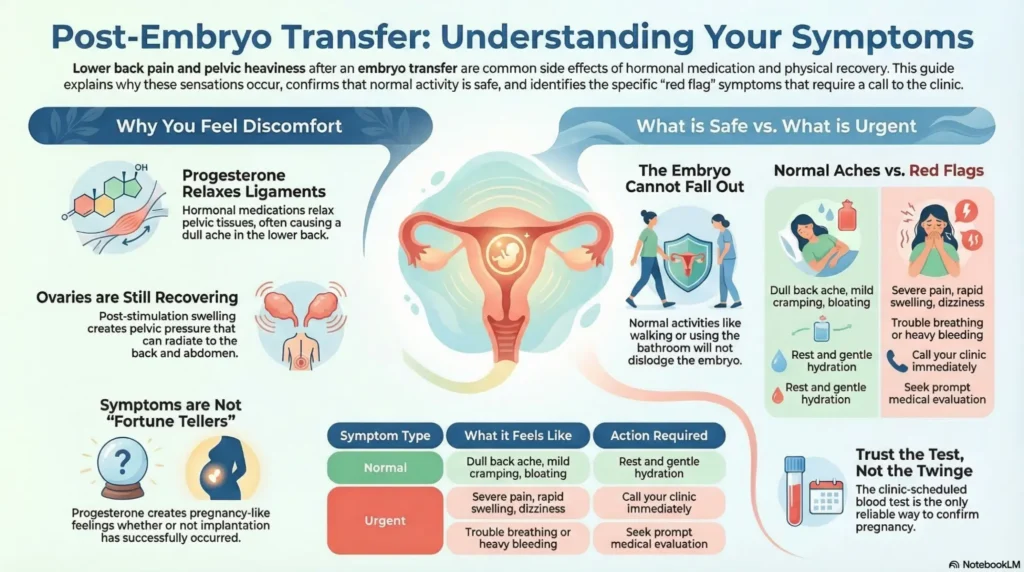
Let me break this down, because I know you’re trying to figure out if you should be worried.
Totally Normal (No Need to Call the Clinic):
- Dull, mild ache in your lower back that comes and goes
- Feeling of pelvic heaviness or pressure
- Mild cramping, like period cramps but lighter
- Bloating or feeling full in your belly
- Soreness at the injection site if you’re doing progesterone shots
- Tiredness or feeling emotional
These are all common effects of the medications and the procedure itself. They don’t mean anything went wrong.
Call Your Clinic Right Away If You Experience:
- Severe pain that doesn’t go away, especially in your abdomen
- Your belly is swelling rapidly, and your clothes don’t fit within a day or two
- Trouble breathing or feeling short of breath
- Heavy bleeding (more than light spotting)
- Sudden severe nausea with belly tightness
- Dizziness or feeling faint
These symptoms could signal ovarian hyperstimulation syndrome (OHSS) or another complication that needs medical attention. Don’t hesitate to call if something feels seriously wrong.
What Should You Actually Do Right Now?
For you:
Stop Googling symptoms at midnight. (I know that’s hard, but it’s making your anxiety worse, not better.)
Instead:
- Go about your normal daily routine, light walking, household tasks, and work if you feel up to it.
- Stay hydrated, drink plenty of water.
- Do gentle activities that distract you: watch a show, read a book, or meet a friend.
- Try some gentle stretches if your back feels stiff
- Take the medications your doctor prescribed, on schedule
For your partner or family:
If they’re asking “Should we call the doctor?” about mild back pain, the answer is no. Mild discomfort is expected. You’ll call if real red flags appear (listed above).
What helps most right now isn’t constantly checking or asking “how do you feel?”, it’s helping keep things calm and normal at home.
What helps most right now isn’t constantly checking or asking “how do you feel?”, it’s helping keep things calm and normal at home. If you’re unsure which precautions actually matter during this phase, it’s worth reviewing clear, doctor-backed guidance on what to do before and after an embryo transfer so you can support without adding unnecessary stress.
The Waiting Game: What Happens Next
I know these days feel impossibly long. Every sensation feels important. Every twinge makes you wonder.
But here’s what you need to remember: your pregnancy test date is the only thing that will give you real answers. Not your symptoms. Not your back pain. Not how bloated you feel or don’t feel.
The hormones you’re taking right now are creating sensations that can feel exactly like early pregnancy, whether you’re pregnant or not. So, trying to “read” your body during these two weeks is like trying to read a book in a language you don’t speak.
Your body is doing its job. The medications are doing their job. The embryo, if it’s going to implant, will do that on its own timeline and nothing you do or don’t do will change that.
You're Doing Everything Right
If you moved around today, you didn’t hurt your chances.
If you’re feeling back pain right now, it doesn’t mean the cycle failed.
If you’re not feeling anything special, that doesn’t mean it didn’t work.
The truth is simpler than all the symptom-watching: you had a good transfer, you’re taking your medications correctly, and now your body needs time to do what it’s going to do.
The mild lower back ache you’re feeling? It’s most likely just your body adjusting to progesterone and recovering from stimulation. It’s normal. It’s expected. And it doesn’t predict your result.
When to take the pregnancy test: Follow the clinic’s schedule exactly. Testing too early can yield false results and increase stress.
What we want you to know: We’re available for real concerns. Don’t hesitate to call about severe symptoms. But for mild aches and normal sensations, trust that your body knows what to do.
Until that test date arrives, be gentle with yourself. This waiting period is hard enough without adding guilt about symptoms you can’t control.
You’ve come this far. Now it’s time to let your body do its part.
Experiencing severe pain, rapid swelling, or difficulty breathing? Contact your IVF clinic immediately. These symptoms require prompt medical evaluation.